The Consequences Drunk Driving

Drunk driving is far more than just poor decision-making. It is also considered a criminal offense that frequently leads to unnecessary loss of lives. Any level of alcohol in your system will impair your ability to drive. The effects of alcohol consumption vary significantly, placing you in danger of causing an accident or sustaining an injury on the road. In case you are convicted of driving with alcohol levels in your blood or breath that exceed specific legal limits, you can be deported when you recently obtained a resident visa in less than the last two years. Alcohol might endanger not only you but also others. 

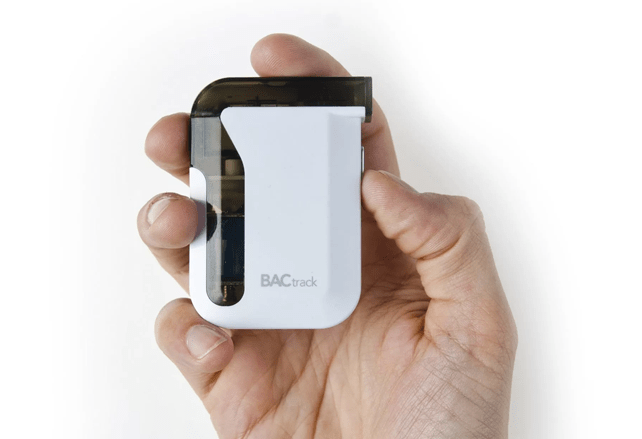
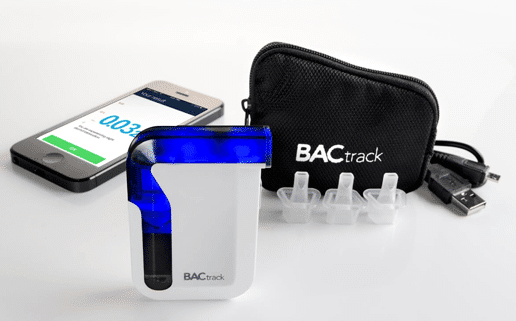
High Blood Alcohol Concentration (BAC) has been related to a higher risk of a collision. Statistically, people with alcohol issues, past drunk driving convictions and drivers who don’t even wear seat belts are more likely to engage in alcohol-related fatal collisions. To avoid road fatalities, drivers must consider using a BACtrack breathalyzer to test their breath for alcohol. They function similarly to a typical portable or keychain breathalyzer and can even link to a smartphone. If you like, you may also share your results with relatives and friends via social media. This is an excellent strategy to cut back on your alcohol intake and make you responsible whenever you drink.

Drunk driving laws in New Zealand 

The alcohol limit in New Zealand for drivers aged 20 and above is 250 micrograms of alcohol per liter of breath and the blood alcohol limit is 50 mg per 100 ml of blood. The alcohol limit for drivers below the age of 20 is zero. If you drive after having even one drink, you can be convicted for drunk driving. If the quantity of alcohol in your breath or the blood exceeds certain limits, you should not drive at all. 

The effects of drunk driving may be life-altering. It makes no difference how much you’ve consumed in regards to been slightly or significantly over the limit as you will still be a convicted drunk driver and a criminal in the eyes of the law. When the authorities want to see if you’re above the drink-drive limit, they’ll perform a breathalyzer test at the scene. If you fail or refrain from taking the test, you will be detained and transported to the police station, where you will be required to produce two additional breath samples into a more advanced breathalyzer. If you fail or keep refusing, you will be accused and this testimony may be used to convict you later. Refusal might potentially result in the forfeiture of your vehicle because refusal to take a blood test is a crime. A driver guilty of a first or second drink-driving offense faces up to three months in jail or a $4,500 fine, as well as a six-month or longer suspension of their driver’s license. 

Effects of drunk driving

Driving Under the Influence (DUI) endangers all lives, not only the drivers. Passengers put their faith in all drivers on the road. Bikers, pedestrians, children crossing streets, dogs pursuing a ball and even individuals enjoying the outdoors in the protection of their own property are at risk of being hit by a drunk driver. Approximately every two minutes, a person is harmed in a drunk driving incident. Careless decisions can destroy all of the barriers that keep us safe. A DUI accused’s family may face mental and financial hardship. Some families even end up broken. 

Financial and Emotional Impact

When most individuals have consumed a few drinks but insist on driving, they should always consider their family’s future.  In the longer term, the emotional harm in a family can be much more destructive than the financial loss. Fines have an instant effect and insurance rates will rise in the long run. Months after a drunk driving offense, job possibilities may be gone. Victims, relatives and the person accused can suffer from the effects of drunk driving for months or years after an accident that only lasted for seconds or minutes. Trauma occurs when a person suffers a sudden physical disability or dies unexpectedly. Even with a solid support structure and professional resources, only a few people are able to cope with severe losses. 

Drunk driving is a huge concern all over the country. A single drink impairs your capacity to drive safely; there is no such thing as a “safe” amount. According to the New Zealand Police, it is best not to drink and drive at all. It is recommended not to drive if you are planning to drink. Call a cab, a bus or arrange for someone who hasn’t been consuming alcohol to drive you home. 


Related Articles:

Drink Limit for Driving

Ways to Avoid Drink Driving

Car accidents are the leading cause of death among individuals and are expected to continue to rise. Drinking alcohol hinders a driver’s ability to make critical decisions while driving. A driver’s ability to perform actions necessary to operate a car safely. Such as effective braking, steering and lane changes are impaired even after just one drink. Alcohol can also impair judgment, putting the driver in danger and making poor decisions on the road. If detected, a person who is caught drink driving might be prosecuted with Driving While Intoxicated (DWI) or Driving Under the Influence (DUI). 

Every year, thousands of individuals are fatally injured as a result of drink driving accidents. Furthermore, each year approximately 350,000 individuals are injured due to the impaired driving and over millions of car crashes. Alternative modes of transportation such as safe rides, subsidized taxis, ride-sharing services, paid designated drivers and more accessible public transportation can help minimize drink driving. But how will you know if you’re over the limit? 

Avoid Drink Driving by use of BACtrack

We watch and read about drivers who are charged with drink driving subsequently involved in a road accident. A statement on the accident will typically state the driver’s Blood Alcohol Concentration (BAC) and the legal blood alcohol limit. Intoxicated drivers must be removed from the road for the sake of public safety. As a result, law enforcement officers employ professional-grade technology to detect alcohol levels in a suspected intoxicated driver. You have probably heard Breathalyzers – New Zealand and BACtrack, but you might be wondering how a person’s breath might indicate how much a person consumed alcohol. 

Are you aware that law enforcement officers aren’t the only ones who can get breathalyzers? For your safety, you can purchase a personal breathalyzer. You won’t have to deal with law enforcement or doctors to determine whether or not you are fit to drive. BACtrack shows you your BAC in seconds by blowing into a mouthpiece and push of a button. Our breathalyzers are portable devices that you can put it in your pocket or handbag. Some of these devices can be connected through a smartphone app and Bluetooth. The concept is to examine your BAC after a night of drinking to see if you are safe to drive because, as we all know that drink driving is illegal. 

BACtrack’s Personal Breathalysers

If you want to avoid drinking too much, a portable breathalyzer can assist. You can be assured you are drinking at a reasonable pace and prevent the risks of drink driving by frequently assessing yourself on the road. For drivers who want to avoid guessing whether or not they are sober and safe to drive, as well as prevent a lifetime of expenses and consequences of a DUI or worse, drunk driving accidents, a BACtrack breathalyser is for you. One of our connected devices, the BACtrack Mobile Pro costs only $169.97 – a small value to pay for peace of mind and safety. Your BAC findings are wirelessly communicated to the BACtrack app when you breathe into the device and can reveal your BAC level with the same precision as the law enforcement officers use. This device can also tell you how long it will take for your BAC to return to 0.00% using its Zeroline® unique feature. You can also receive an accurate and reliable BAC result by purchasing our BACtrack S80 breathalyzer. Law enforcement officers in some countries use this device as preliminary testing during DUI traffic stops to determine if someone is drink driving. Simply turn it on, breathe through the mouthpiece and you will have your BAC readings within seconds. Compared to the traditional semiconductor sensors, this device has a fuel cell sensor to give incomparable accuracy. You can view our website for all our other models that will suit your lifestyle and budget.

Get a BACtrack before drink driving to make sure your BAC is zero. Law enforcement officers and healthcare professionals have all benefited from BACtrack breathalyzer’s accuracy. Our consumers rely on us to provide the most convenient, inexpensive and accurate blood-alcohol testing available. There are a multitude of other portable breathalyzers on our market. Check them out now.

Drinking Limit for Driving

According to statistical evidence, deaths from accidents caused by driving over the legal drinking limit are down compared to twenty years ago. However, there are still too many deaths and serious injuries involving people who have been driving over the official limit. In 2008, the Ministry of Transport reported drivers with alcohol or drugs contributing to 103 fatal crashes, 1156 minor crashes and 441 serious injury crashes. These crashes resulted in 119 drivers or riders killed on New Zealand roads with a Blood Alcohol Content (BAC) exceeding the legal limit. In 2020, 37 were killed, and 476 serious injuries were reported.

When driving in New Zealand’ the blood alcohol level should not exceed the legal limit of 0.05%. However, beginner drivers and professional drivers require a zero BAC. The BACtrack S80 Pro is the model most commonly used for these situations.


If you want to drive after going to a party, an event or a gathering, you might want to monitor your alcohol level to understand and estimate when to stop drinking. Never drive if you are over the limit or even feel intoxicated, even if your breathalyser puts you in a safer range than you think. To test your BAC, you will need to have a personal breathalyser. A breathalyser is a simple and easy to use tool that detects blood alcohol levels and helps you understand what range you are in throughout testing. The BACtrack breathalyser is the number one and most affordable hand-held breathalyser brand in New Zealand and the entire world.

Using a breathalyser will assist you in taking responsibility whilst drinking alcohol. You should not drive if your BAC exceeds the legal limit or even if you feel unsafe driving and are under the limit. Imagine the feeling of being in a hospital or putting someone else there because of your drinking and driving. Worse still, you could harm or kill someone or yourself on the road. It is so simple to use a breathalyser, and if you are over the limit, you can wait until you are under the legal limit or grab a cab home.

Drinking and driving are legally and socially unacceptable, with not just the courts frowning on such behaviour. Pals and neighbours can ostracise offenders. The days of casual drink driving are well and genuinely over, with the vast majority of people recognising the dangers of driving when intoxicated on the road.

Related posts:

Drink Driving Fine in New Zealand

Alcohol is one of the significant factors involved in fatal crashes. If you are in any doubt about being safe or legal to drive after drinking, don’t – it’s not worth it.

The Land Transport Act 1998 in New Zealand’s sets out drink-driving laws and fines.


Drink driving under-20s


If you are below or under the age of 20, the blood-alcohol limits are zero. Basically, if you have any alcohol in your blood, you will be fined and given demerit points.


Drink driving ages 20 and above


If you are older than 20, you can drive a vehicle while your blood-alcohol level is below 0.05%. If your blood-alcohol level is between 0.05% and 0.08%, you will receive a $200 on-the-spot infringement notice, and you will also receive demerit points. If your blood-alcohol level is 0.08% and over, you will be prosecuted through the courts and, if convicted, are often jailed for up to 3 months or fined up to $4,500. You will also be automatically disqualified to drive for a minimum of six months. If it’s your first offence, typically, you will pay a fine in proportion to how far over the limit you are. For being over the BAC limit, typical fines could be worked out as your percentage over and are multiplied by five. As an example, if your blood-alcohol level is 0.10% (10 mg over the limit), the fine will be $500, for 0.12%, the fine will be $600, and so on, and you will normally need to pay Court costs. For a second drink driving fine, likely sentences can depend on, for instance, how soon after the first offence was made. For a third offence, the penalties are far more serious. Repeated or serious drink driving incurs heavier fines. If you are sentenced for a third or more times of driving over the adult alcohol limits of 0.05%blood-alcohol, the penalties are heavier, and you can be jailed for up to 2 years or charged up to $6,000. You will automatically be disqualified from driving for a minimum of one year. 

In conclusion, drinking and driving is illegal and is not worth the risk to the lives of innocent people or yourself. Don’t drink and drive. Know your Limits and utilise a BACtrack breathalyser to help guide you in your decision making.


Related articles:


Car Breathalyzer

According to the Land Transport Amendment Bill (No. 2), a car breathalyzer will be required in sentencing for consequential alcohol-related driving offenses beginning on 1 July 2018. 

What if you could implement a reliable security measure in new automobiles that could save tens of thousands of lives? There is, in fact one available.  In New Zealand, an ignition interlock device is installed in the vehicles of several thousand drivers. If the driver has previously been charged with alcohol related offences, they may need to install an ignition interlock device, often known as a car breathalyzer, prohibiting the car from starting. Installing a car breathalyzer in each new automobiles would prevent tens of thousands of deaths, as well as millions of severe injuries and billions of dollars in injury-related expenses. 

Car breathalyzers have shown to be quite effective in reducing the number of Driving Under the Influence of alcohol (DUI) related casualties. It also could seem that most individuals are unaware that you do not need to be accused with a DUI to have a car breathalyzer placed. In reality, you may install a car breathalyzer device in any vehicle you own willingly. 

 How does it Work?

How does the car breathalyzer work? You breathe directly into the mouthpiece just before starting the engine and the car will not start if the device detects alcohol content in the driver’s breath. The device also saves all of your data and you must also take the car to the installer each month for maintenance and to collect the readouts. The alcohol breathalyzer will prohibit the vehicle from starting until the installer unlocks it for a scheduled file upload. 

 Advantages and Disadvantages of a Car Breathalyzer

Car breathalyzers are one of the most effective ways to keep drivers safe from the alcohol related offences off the highway. Several thousand interlocks have been installed in New Zealand previously and they have prevented thousands of individuals attempting to drive while having previously consumed alcohol, which is why as many high-risk drivers as feasible must get a car breathalyzer installed in their vehicle. 

The disadvantage of having a car breathalyzer is that you will be obligated to pay an installation cost to the installer, a monthly leasing price to the installer, and a license application fee. But one thing to keep in mind is there is no small price to pay for your safety and that of other’s. 

Many individuals may be  unable to determine just how intoxicated they are. Regardless of how well someone believes they can “hold their alcohol,” their body and behavior will most likely demonstrate otherwise. In reality, alcohol affects your capacity to assess your level of impairment. A car breathalyzer device will provide the extra layer of security you need to avoid driving after a night of drinking. 


For more information about breathalysers, visit our FAQs section.


Breathalyser Test and Field Sobriety Test

Motorists can be stopped by police and required to take a breathalyser test at a road traffic accident scene. 

Police may pull you over for various reasons. You might get pulled over for speeding, reckless driving, running a red light, or an equipment violation. However, one obvious reason is the suspicion of drunk driving. Many indications can help a police officer spot an impaired driver. The following signs can reveal if someone is driving under the influence and by conducting your own breath test can also give you an accurate indication: 

  • Driving at unreasonably low or excessively high speeds 
  • Ignoring traffic signs 
  • Driving without lights 
  • Following another car too closely. 
  • Changing lanes frequently 
  • Driving with turn signals on
  • Making extremely wide turns, and so on. 

So, when a police officer notices some of these signs, they will pull you over to check your blood alcohol content. You may be requested to do a field sobriety test first, and if it’s not conclusive, the police officer will administer a breathalyser test. Breathalyser tests are mandatory, but you can refuse to do a field sobriety test. 

Although field sobriety tests are somewhat controversial, as they are based on the police officer’s subjective opinion on how drunk a person is, they are still conducted in NZ. There are three standardised tests: the one-leg stand, the walk and turn, and the horizontal gaze nystagmus test. 

The Standardised Tests

You have to take nine heel-to-toe steps along a straight line. This is called the walk-and-turn test. After the nine steps, you have to turn and take another nine steps going back to the starting point. If you can’t touch heel-to-toe, or you use your arms to maintain balance, or you take more or fewer steps than what the officer has instructed, the police officer will consider that you are driving under the influence of alcohol.

In the one-leg stand test, you have to try and stand on one leg for 30 seconds, while counting aloud. Your other foot has to be 6 inches off the ground. If you try to balance your arms or put your foot down, you will fail the test. 

These are the standardised tests, which are conducted most often. Apart from that, there are several other tests that you may be asked to do. For example, you may have to count backwards or recite the alphabet. Another one is by closing your eyes and trying to touch your nose. This is called the finger-to-nose test. 

So, even though the validity and reliability of field sobriety tests are disputed, drivers have to be aware that many officers use them to determine if someone has high blood alcohol content. You might get pulled over and have to respond at any moment.  

For more info about breathalyser test, click here. 

For breathalyzer recalibration, click here.

Where to buy a breathalyser? Click here.

Alcohol Test and Its Various Types


alcohol-test


The Various Types of Alcohol Tests

The most common drug affecting performance in the workplace and other institutions is alcohol. This has opened up the market for various alcohol tests. Businesses, schools, universities, and law enforcement groups use alcohol tests to check the level of alcohol in a person’s system. Alcohol abuse in a workplace may make a person a danger to themselves and others, or simply unproductive.

Some alcohol tests can only determine the recent consumption of alcohol. Others can detect a pattern of alcohol abuse over time.

The current alcohol tests available can analyze samples of a person’s breath, urine, blood, saliva, hair, and sweat. The most commonly used personal alcohol tests currently are breathalyzers which analyze a sample of a person’s breath.

Breath Alcohol Tests

Breathalyzers provide an almost instant result. They can also be an economical way to keep track of your Breath Alcohol Concentration (BrAC), levels. Breathalysers can detect alcohol in your system for up to 24 hours after drinking. You can also easily buy Personal breathalyzers online in a range of sizes, functionalities, and prices.

Some are a compact key ring style. This means you always have your breathalyser handy for those “spur of the moment” after-work drinks. Other models are more durable and are perfect for a workplace to use to test employees regularly. Most come with replacement mouthpieces. This makes hygienic sharing easy. Some models also work with a smartphone app so that you can keep a record of your alcohol levels and consumption over time. Quality personal breathalyzers are as accurate as Police issued ones so you can have complete faith in the results.

alcohol-tester

Blood Alcohol Tests

Police use Blood alcohol tests to confirm the results of breath and urine tests. A laboratory analyses a blood sample, and the result shows a person’s Blood Alcohol Concentration (BAC). A drunk driver can be convicted with this result. Blood alcohol tests can detect the level of alcohol consumption in the past 24 hours. Blood tests are also done in a hospital after workplace or traffic accidents.

Saliva Alcohol Tests

Saliva alcohol tests are a cheap, easy, and effective way to test alcohol consumption in the workplace. This test is reasonably non-invasive, simply requiring a swab from the inside of the cheek. This does require the test subject to cooperate. Saliva tests can detect alcohol in the system for around 10-24 hours after drinking. Saliva test kits can give a result in as little as 20 seconds.

Like urine tests, they will not give an accurate BAC. They detect alcohol, and further testing with a blood alcohol test may be required.

Urine Alcohol Tests

Urine alcohol tests are easy to use but require a sterile sample. This is intrusive and can be hard to obtain. Urine alcohol tests simply show the presence of alcohol in a person’s system. Therefore, they can’t show how much a person has drunk, how regularly they drink, or how long it has been since they last had a drink. Urine can contain alcohol for 12 to 48 hours after drinking.

The more complex EtG (ethyl glucuronide metabolite) urine test can detect alcohol for up to 5 days after ingestion. Exposure to ethanol found in alcohol causes a metabolite called Ethyl Glucuronide to form in the urine. EtG in urine is proof of alcohol consumption at some point in the last few days. It does not, however, show current or previous levels of intoxication.


blood-alcohol-testers

Hair Tests

Your hair can also be tested for alcohol use. Hair follicles, like urine, also show a record of EtG from alcohol consumption. It can be found in hair for up to 90 days after the consumption of alcohol. This complicated process is completed in a laboratory. Tests are usually only performed in cases of extreme alcohol abuse. Usually, when someone is required by the courts to abstain from alcohol completely. This could be for child custody, probation, or other legal reasons.

This alcohol test shows long term behaviour patterns, rather than current status. The EtG test is susceptible, however, and can pick up even the slightest traces of alcohol. Some positive results may be the result of contact with alcohol in items such as common household cleaners.

New Technology Tests on skin

A thin, flexible patch worn on the skin is the most recent development in alcohol tests. This patch detects a person’s BAC through their sweat. The BACtrack Skyn is the most advanced technology available on the market. It is also the world’s first wearable transdermal alcohol monitor. This device is worn continuously showing real-time monitoring of blood alcohol levels. The patches work by stimulating the body to sweat in the area under the patch. It uses a technique that drives a chemical across the skin, creating sweat. An electronic chip analyses the sweat. The sensor works quickly and sends the results to a mobile device or laptop.

The sweat generation can be continuous, therefore allowing for constant monitoring over hours or days. Additionally, you can link the patch to a vehicle interlock system. This vehicle locking device will only allow the vehicle to start when the driver has passed an alcohol test. Results from comparison Tests on skin patches and breathalyzers found that the results were almost identical. Above all, this effective newer technology can be relied on to give accurate results.

The Reliable S80

The Bactrack S80 has proven to be easily the most accurate and reliable personal breathalyser on the market. This unit may not be the most compact or the most technologically advanced breathalyser available in Bluetooth/cell phone connectivity. Still, it makes up for this in being uncomplicated and efficient. It simply does what it is designed to do correctly, over and over again.

The S80 is tough, resilient, and clever and is always accurate and reliable. The S80 has trusted the world over by law enforcement and health professionals who rely on quick, accurate results every time. The Bactrack S80 can be relied on as both an entry-level workplace breathalyser and a high-end personal breathalyser. Clever design by Bactrack has allowed one model to cross over two very different markets.

How a Breath Analyser Works

How does a Breath Analyser work?

A Breath Analyser estimates your BrAC (breath alcohol content) by measuring the amount of Ethanol in your breath. The first breath analysers were invented in the early 20th century. They were in regular use by Police from the 1940’s. The only other methods for testing for drunkenness at the time were blood or urine tests. These were impossible for police to use out in the field. Breath analysers gave them the system they needed to keep drunk drivers off the road.

How the Body Absorbs Alcohol

When you drink alcohol, the ethanol it contains is absorbed into your body. This is through your mouth, esophagus, stomach, and intestines. Ethanol evaporates easily within the body into your blood stream due to our internal body temperature. As the blood containing this alcohol passes around your lungs, the ethanol evaporates into them. The ethanol is stored in areas in the lungs called alveoli. This can be picked up in your breath by a breath analyser.

The alcohol in your alveoli is related to a BAC (blood alcohol content) ratio of 2100 to 1. This means that 1 ml of blood has around the same amount of alcohol as 2100 mls of air from your lungs. Brfeath analysers use this ratio to measure your BAC.

Passive and Active Breath Analyser

There are two types of breath analysers available today. These are Passive or Active breathalysers. Passive breathalysers do not give a BAC estimate, they simply show whether alcohol is present in someone’s system. A Passive breath analyser only needs the subject to speak or blow over the device to sample the breath.For example, the subject may be asked to count to ten. These are useful for workplaces that may have a zero-alcohol policy. Any alcohol on the breath will be picked up.

Passive breathalysers can also be useful in situations where a large number of people need to be tested. For example, all staff are tested through a Passive breathaslyser. Only those that test positive to alcohol are tested with the Active breathalyser. As Passive breathalysers are much faster to use, it speeds up this process for a large group.

Police will also use a Passive breathalyser first to speed up roadside breath tests. Only if you fail this Passive test will they put a mouthpiece into the device and do an Active breath test.

Active breath analysers will give an actual estimate of the amount of alcohol in the blood. An Active breath analyser requires the subject to blow into the device through a mouthpiece for a required amount of time. Active breathalysers are much more accurate then Passive. The air analysed by a passive device can be contaminated by fumes, smoke, or dust, . An active device sample is less likely to be contaminated because of the mouthpiece.

Active breathalysers are more common for personal breathalyser use. There are three main types:

online-breathalyzer

Semi-conductor Breath Analyser

Semi-conductor Breath analysers are the most economical type. They are also generally more compact. Some can be small keyrings or similar. The ethyl alcohol in the breath generates an electric current . This occurs as it passes through a mix of acetic acid and water. The electric current formed is in proportion to the amount of alcohol in a person’s blood.

Semi-conductor breathalysers are less accurate than other types however. This is because of the influence of other substances that can act like acetic acid. Diabetics and people on a low-carb diet naturally have more of this in their breath and this can affect the reading on a semi-conductor breathalyser. They are also less accurate over multiple consecutive readings than fuel cell models.

Nevertheless, if you want a simple reading to show that someone has been drinking then these models are perfect and affordable. If you want accurate results every time, then they will not suit.

Fuel Cell Breathalysers

Fuel Cell breath analysers include two platinum electrodes. An acidified electrolyte substance surrounds these electrodes. The ethyl alcohol in the breath is oxidised by passing betwen the electrodes. This oxidization turns it into acetic acid, protons, and electrons. The electrons produce a measurable current. The more oxidized alcohol present, the stronger the current. A microprocessor measures the BAC.

Fuel Cell breath analysers are the most accurate. There are virtually no contamination issues. The acetic acid in the breath of diabetics also does not affect them. Fuel Cell models are also accurate over multiple consecutive tests. Consequently, they are more reliable than semi-conductor models. Police breathalysers are always fuel cell models.

drunk-driving

Infra-red Spectrophotometer technology

You will be taken back to the Police station for further tests if you fail a roadside breath test. A desktop breath analyser will be used. These employ Infra-red technology. When you breathe into the analyser, a beam of Infra-red radiation will pass through the sample. The device calculates how much ethanol is in 100ml of air by how much of this radiation reaches the other side of the collection chamber. It uses the same ratio of breath alcohol to blood alcohol as other devices, being 2100:1. The device can then work out the amount of alcohol in the blood and show the results on a screen. These results can be used in Court as evidence.

The Future of the Breath Analyser

Breath Analysers are now a regular feature in many people’s lives. They help keep our roads and workplaces safe and have subsequently saved many lives.

The basic method of breath analysis has not changed much since the first examples. You blow into a device and chemicals within that device react to the alcohol in the breath.

The modern technology now used however has made them much more accurate and reliable. They are also more compact and portable. This technology will no doubt keep improving. Consequently, breathalysers will continue to become a bigger feature in our lives.

The Reliable S80

The Bactrack S80 has proven itself to be easily the most accurate and reliable personal breathalyser on the market. This unit may not be the most compact or the most technologically advanced breathalyser available in terms of bluetooth/cell phone connectivity, but it makes up for this in being uncomplicated and efficient. It simply does what it is designed to do correctly, over and over again.

The S80 is tough, resilient, and clever and is always accurate and reliable. The S80 is trusted the world over by law enforcement and health professionals who rely on quick, accurate results every time. The Bactrack S80 can be relied on as both an entry level workplace breathalyser and a high end personal breathalyser. Clever design by Bactrack has allowed one model to cross over two very different markets.

The Award winning BACtrack S80


bactrack-s80-professional-breathalyzer


The BACtrack S80 is considered one of the best breathalyzers in the market today. The S80 has won many awards since it’s invention. The most recent of these being “Best Overall Breathalyser” in the LifeWire ‘Top 8 Breathalyzers of 2019’. It also won “Best Breathalyser” in ‘CarBibles’ ‘Best Breathalyzers (Reviewed and Tested in 2019)’. This device is BACtrack’s premier device and is sold worldwide to personal, business, and health care users.

Why is the S80 Special?

What makes the BACtrack S80 so special is its dependable accuracy. The S80 contains BACtrack’s platinum-based Xtend electrochemical fuel sensor. This is the same technology used in Police breathalyzers. The S80 is approved by the US Department of Transportation as well as the FDA. Hospitals and other institutions trust it as they know they will get accurate results every time over thousands of tests.

The BACtrack S80 can detect alcohol levels from trace amounts up to 0.4% and is accurate to the third decimal place. Diabetics and people on low-calorie diets can have high levels of acetone in their breath. This can cause false positives in breath tests using semi-conductor breathalyzers. The presence of acetone does not affect the S80, so it’s also accurate for these people. In comparison tests over multiple experiments, the BACtrack S80 recorded repeated similar results to Police Breathalysers. Therefore, proving itself as accurate as these other devices.

The BACtrack S80 has a built-in memory that records your last ten test results so that you can keep track of your BrAC over time. This is useful in understanding how your body metabolises alcohol over time and lets you know when you are safe to drive after drinking. It also records the total number of tests done since recalibration so that you know when it is next due to be recalibrated.

How to look after your BACtrack S80

The device needs to be recalibrated every 6-12 months depending on whether it is used for personal or business use. It will also let you know if there has been a problem during the test. Maybe the breath sample is too small for reading, or there are issues with the testing environment.

The ideal conditions for accurate readings are between 0 and 40 degrees Celsius (32-104 F). The S80 will let you know if the conditions are too hot or too cold. The subject should also wait 15-20 minutes after eating, drinking, or smoking before using the S80 for the best results.

portable-breath-tester

The Technical Side

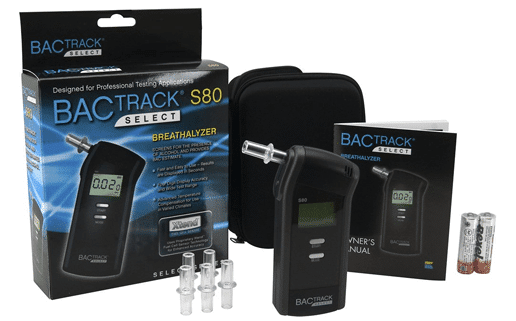
The S80 is a compact, lightweight device that is incredibly simple to use. The device is 12.2 x 5.8 x 2.2cm and weighs just 136 grams, including the mouthpiece and batteries. It comes with 2 AA batteries ready to go. You can complete around 1500 tests on the S80 from one pair of AA batteries.

It has a small LCD screen with two buttons on the front. These turn the device on, adjust the blow time settings, adjust the blow flow settings and set beep alarms if required. There are no software or apps involved in the S80, so the process is straightforward and fast. No other devices, such as smartphones, are required.

How to use the BACtrack S80

To begin a test, press the “Start” button for a couple of seconds. A countdown timer will start on the screen, and when this reaches 0, an alarm will sound, and you blow into the replaceable mouthpiece. Stop blowing when the next alarm sounds (around 5 seconds), and within a few more seconds, your BAC will be displayed on the screen.

An audible alarm can be set to go off if the reading is above the New Zealand legal limit of 0.05 (or whatever level you would like to set it). For greater accuracy, BACtrack breathalyzers (including the S80) contain a miniature solenoid air pump to ensure the test only includes air from the deep lungs. Ambient air, fumes, and other gases can contaminate the breath test and are excluded. The device will power itself down after 10 seconds of inactivity to conserve battery life.

The Mode Button

The second button, the “mode” button allows you to customize the alarms and change the breath flow and time rate. Changing the breath flow rate allows you to use a shorter, shallower breath. This may affect overall accuracy but may be necessary for some people who cannot complete a full, deep blow. You can also use this button to change the units of measurement displayed.

BACtrack S80 Accessories

The Bactrack S80 comes with 6 spare mouthpieces that easily clip in and out of the device. This allows hygienic use of the device by multiple people. Mouthpieces can also be bought separately in packs of up to 50 individually wrapped items. This makes the S80 ideal for use in a workplace, school, or other institutional environments. The device also comes with a handy hard shell, zippered carry case to store your S80 and spare mouthpieces securely.


bactrack-s80-breathalyzer

The Reliable S80

The BACtrack S80 has proven to be easily the most accurate and reliable personal breathalyser on the market. This unit may not be the most compact or technologically advanced breathalyser available in Bluetooth/cell phone connectivity. Still, it makes up for this in being uncomplicated and efficient. It simply does what it is designed to do correctly, over and over again.

The S80 is tough, resilient, and clever and is always accurate and reliable. The S80 has trusted the world over by law enforcement and health professionals who rely on quick, accurate results every time. We can rely on the BACtrack S80 as both an entry-level workplace breathalyser and a high-end personal breathalyser. Clever design by BACtrack has allowed one model to cross over two very different markets.

Where to buy breathalysers, click here.